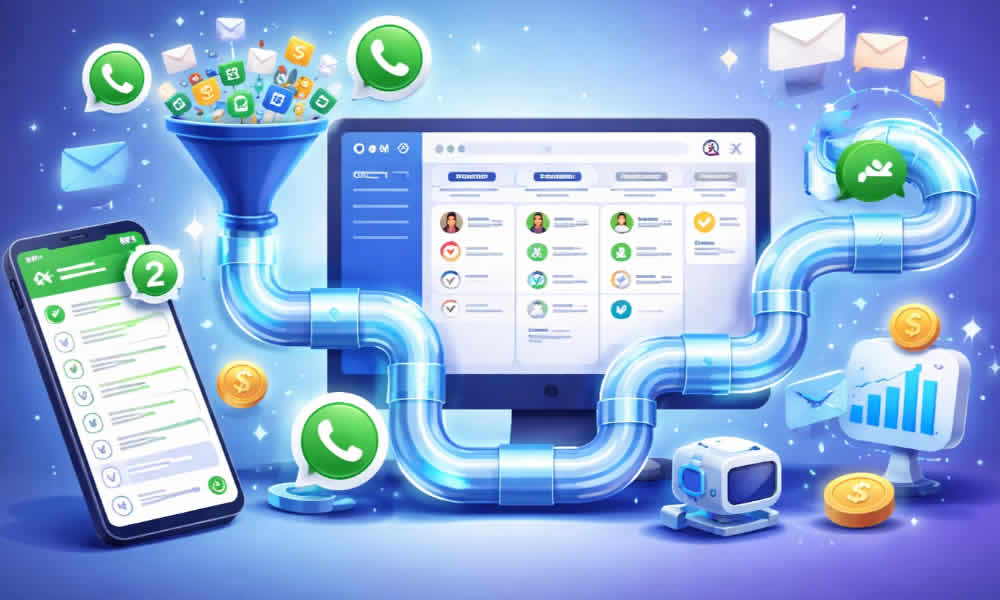
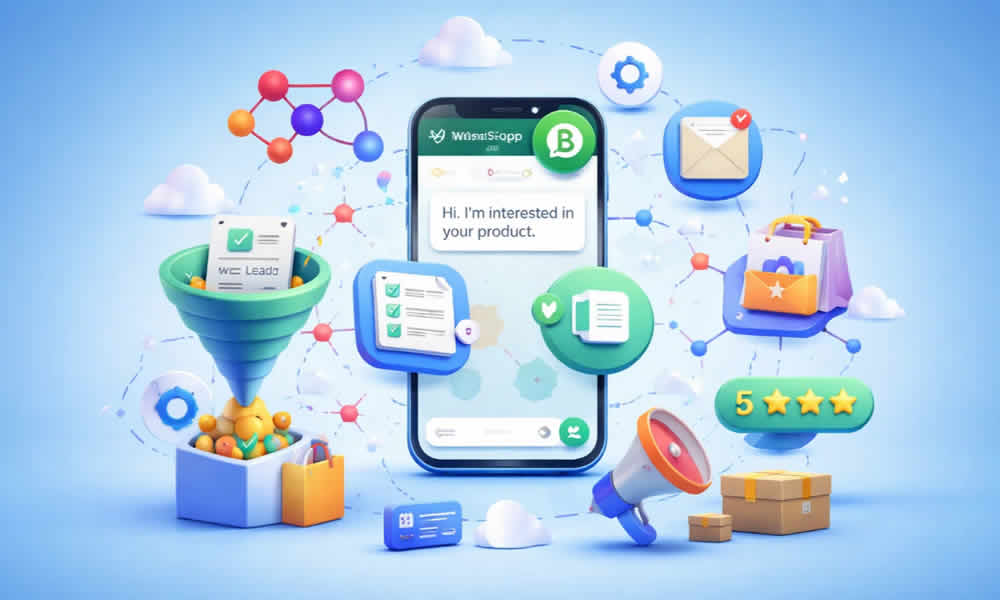
There comes a moment when replying fast no longer solves everything. As your business grows, the real bottleneck becomes consistency: not losing leads, not forgetting follow-up, not leaving tickets unanswered, and not failing in post-sale. Meanwhile, customers keep choosing the same channel they already trust: WhatsApp. Therefore, combining n8n with WhatsApp Business Cloud is a direct way to turn conversations into processes that run with predictability, instead of depending on memory or “finding time later”.
Additionally, this approach is not limited to large companies. On the other hand, it can be even more valuable for small teams, because it helps you scale without hiring immediately. As a result, rather than spending energy on repetitive tasks, you automate what repeats: capturing data, qualifying leads, sending messages at the right moment, updating the CRM, triggering follow-up, and activating internal actions. In summary, WhatsApp stops being a loose chat and becomes a system for sales and support.
What n8n is and why it works so well with WhatsApp
n8n is an automation and orchestration platform. In simple terms, it connects tools and lets you build rules like “if this happens, then do that”. Therefore, it is ideal when you want your business to react automatically to real events: a new WhatsApp message, a payment approval, a form submission, or a booking request. Meanwhile, your team focuses on what requires human judgment, and the workflow handles everything else with consistency.
Moreover, n8n is flexible and can be hosted on your own server, which increases control and can reduce long-term costs. In contrast, when you rely on closed platforms, every adjustment becomes limited, expensive, or locked behind restrictions. In fact, with n8n you can build automations tailored to your process and still refine them over time without starting from scratch. As a result, your operation becomes a living system that improves continuously.
WhatsApp Business Cloud: the stable path to automate without risky shortcuts
WhatsApp Business Cloud is the official way to integrate WhatsApp with external systems through an API. Therefore, it is one of the most stable foundations for automating messages, events, and conversational flows with predictable delivery. Additionally, because it is an official channel, it follows clear rules: conversation windows, approved templates for proactive messages, and policies designed to protect user experience. As a result, you can scale with confidence instead of depending on fragile workarounds.
However, automation is not about sending messages nonstop. Instead, it is about using WhatsApp with intent: helpful messages, at the right time, with clear context. Consequently, your number protects its reputation and the customer feels the communication is professional, not intrusive. In summary, the best automation respects the customer’s pace while still moving the process forward.
“Ready-to-use” automations: what that means and why it saves weeks
When people talk about “ready-to-use” automations, they mean workflows designed for common business scenarios and proven in real operations. Therefore, instead of building everything from zero, you start from a reliable structure and adapt it to your business. Additionally, this reduces classic mistakes: sending messages at the wrong time, missing validations, collecting incomplete data, or forgetting follow-up steps.
In fact, the best results show up when the workflow is well chained: capture the lead, register the data, notify the team, respond clearly, schedule follow-up, and trigger post-sale when appropriate. In contrast, when each piece is separated, the process breaks and conversions drop. As a result, a “ready” automation is not a lazy shortcut; it is a faster path to quality and consistency.
Leads: capture, organize, and respond in minutes even when no one is available
The first goal is simple: don’t lose any lead. Therefore, n8n can receive an inbound WhatsApp event, extract key details, and register everything in a CRM, spreadsheet, or database. Additionally, it can tag the lead based on keywords, schedule, service type, city, or source. As a result, when a human steps in, they do not start from zero.
Meanwhile, WhatsApp Business Cloud can send an immediate reply that still feels human: a confirmation, one or two qualification questions, and a clear promise of the next step. Consequently, the user doesn’t feel abandoned. In contrast, if the lead waits hours, they often go with the first business that responds.
Moreover, the workflow can branch intelligently. For example, if the customer asks for “price”, the flow can provide a range and request only the minimum needed for a quote. On the other hand, if they ask to “book”, the flow can validate city, service, and time preference before sending them to scheduling. In addition, if they ask to “talk to a human”, n8n can notify the right person and open a ticket with context. In fact, that branching is what makes automation useful rather than merely automatic.
Follow-up: the revenue you lose from inconsistency and how to win it back
Many businesses lose sales not because the offer is weak, but because follow-up is inconsistent. However, doing follow-up manually is exhausting and unreliable. Therefore, n8n can schedule reminders with simple rules: “if the lead hasn’t replied in two hours, send a short message,” or “if a quote was sent and there is no confirmation in twenty-four hours, offer a quick call.” As a result, you stay present without living inside WhatsApp all day.
Meanwhile, the message doesn’t need to sound pushy. Instead, it can be helpful and brief, with easy reply options. Consequently, the customer returns to the conversation without feeling pressured. In fact, when follow-up is well written, it feels like real care, not insistence.
Additionally, the flow can stop automatically when the lead replies or when the CRM status changes. Therefore, you avoid the classic mistake of chasing someone who already bought. In summary, follow-up becomes smart, respectful, and measurable.
Post-sale: automate to retain customers, reduce complaints, and build reputation
Post-sale is often neglected, even though loyalty is built there. Therefore, with n8n you can trigger a sequence the moment a purchase is confirmed or a service is completed: a thank-you message, instructions, resources, delivery confirmation, and a simple usage guide. Additionally, you can schedule a check-in a few days later: “Did everything go well?” As a result, customers feel supported even when your team is busy elsewhere.
Meanwhile, if the customer reports a problem, the workflow can automatically open a ticket, assign an owner, and store the full history. In contrast, without automation, the complaint gets lost among chats and frustration grows. In fact, when support has context, it resolves issues faster and with less friction. In summary, post-sale stops being reactive and becomes proactive.
On the other hand, lightweight feedback messages can be powerful. Therefore, if the customer is happy, the flow can guide them toward a review or referral. Meanwhile, if something went wrong, the same flow can route them to the right fix quickly and privately. As a result, automation reduces cost while increasing perceived quality.
Templates and conversation windows: how to do it right without complications
WhatsApp Business Cloud follows rules. Therefore, proactive messages typically require approved templates, while user-initiated conversations can be handled inside the permitted conversation window. Additionally, a good implementation clearly separates these scenarios to avoid blocks, failed sends, and bad user experiences. As a result, your operation remains stable and predictable.
Moreover, n8n can decide when to use a template and when to reply inside the active conversation window, based on timing, lead status, intent, and history. In contrast, when that control doesn’t exist, messages arrive without context or fail to deliver at all. In fact, the main principle is simple: every message must have a clear reason and real usefulness for the customer.
Automation that feels natural: practical examples for agencies, commerce, and services
For instance, in an agency, a lead arrives asking for “a website” or “campaigns”. Therefore, the workflow can ask two or three quick questions, register the brief, score priority, and suggest a call. Additionally, if the lead goes quiet, a short follow-up triggers automatically. Meanwhile, if the lead replies with budget or urgency, the seller receives everything ready: intent, service type, and key details. As a result, the human steps in to close, not to collect basic information.
Similarly, in commerce, customers ask about product, stock, and delivery. Instead of repeating the same answers all day, the workflow can check inventory, send availability, offer payment options, and confirm shipping steps. In fact, when connected to orders or payments, the process becomes faster and more reliable. Consequently, sales flow with less friction.
Meanwhile, in services, customers often want to book quickly. Therefore, the flow can validate city, service type, and time preferences, connect to the calendar, send reminders before the appointment, and trigger post-sale after completion. As a result, the operation stays organized without relying on “remembering later”.
Common mistakes when automating and how to avoid them from day one
The most common mistake is automating without a strategy. Therefore, before building anything, define the goal: capture more leads, increase reply rate, improve closing, or reduce complaints. Additionally, map the customer path: what they ask first, what blocks them, and which data is truly necessary. As a result, the workflow stays focused instead of becoming a complicated maze.
Meanwhile, another mistake is creating long and heavy flows. In contrast, WhatsApp works best with short steps, clear choices, and messages that respect the user’s time. In fact, effective automation doesn’t talk too much; it guides. On the other hand, measurement is essential: track where users drop, which options they choose, and which paths convert. In summary, n8n becomes a living tool, not something installed and forgotten.
The final shift: turning WhatsApp into a process engine, not a chaotic inbox
When you implement n8n + WhatsApp Business Cloud, the gain is not only technical; it is operational. Therefore, your team stops depending on memory, “when we can,” and messy chats. Additionally, leads get registered, follow-up runs on time, and post-sale keeps a consistent service standard, even on busy days. As a result, your business grows with predictability and fewer leaks.
In summary, ready workflows for leads, follow-up, and post-sale are not a luxury. In practice, they deliver speed, organization, and sales with consistency, while keeping the human tone that makes WhatsApp so powerful. Consequently, you stop relying on luck and start running a repeatable system.