
In many businesses, the real bottleneck isn’t lack of demand. In practice, it’s the lack of time to respond well, fast, and consistently. Meanwhile, leads arrive on WhatsApp asking the same questions: pricing, availability, how it works, how long it takes, what’s included. Therefore, when replies come late, the chat cools down, the customer disappears, and the opportunity turns into another “seen” with no revenue attached.
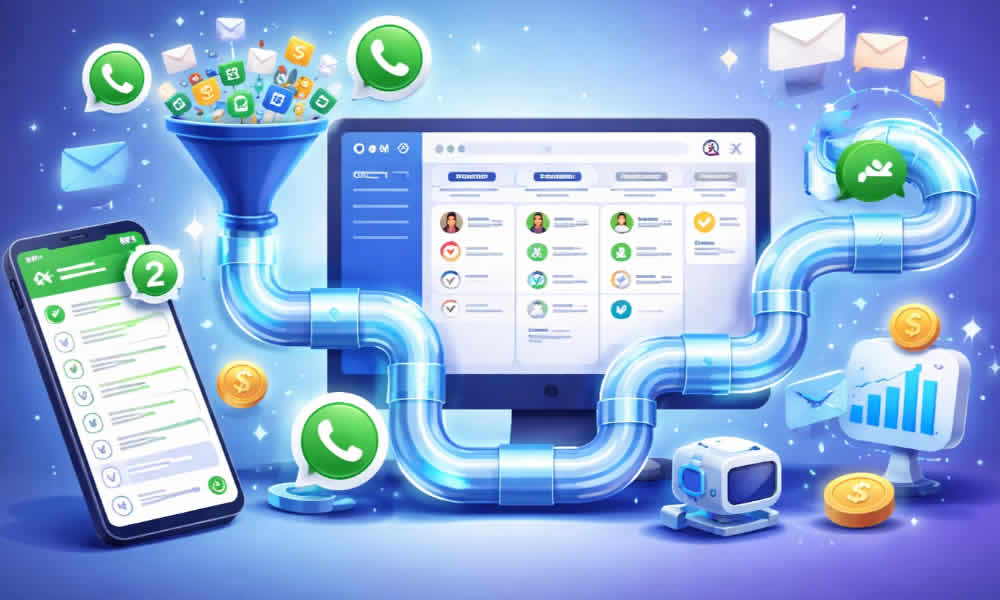
Moreover, relying on constant availability creates a draining loop: you reply when you can, you miss the best moment when you’re busy, and you end up working in “firefighting mode.” On the other hand, building a conversational funnel with Typebot turns WhatsApp into a process: the lead enters, gets guided, shares key data, understands conditions, chooses a path, and arrives more ready to buy or book. In fact, a well-designed flow doesn’t replace the human touch; it protects humans from repetitive work and speeds up real closings.
What Typebot is and why it fits WhatsApp so well
Typebot is a tool for creating guided conversations with clear “step-by-step” logic and branching paths based on what the user chooses. In other words, instead of a rigid bot, you build a journey that feels natural while remaining predictable and consistent. As a result, the lead doesn’t get lost in an open-ended chat; they move forward with clarity, without typing long messages or waiting for someone to “show up” to respond.
Additionally, Typebot can connect with other systems through integrations and automations. Meanwhile, you can save data to spreadsheets, send details to a CRM, generate tickets, alert a sales team, and even connect to calendars. Rather than “a bot that only answers,” you get a service system that performs real actions and delivers a more professional WhatsApp experience.
Why a conversational funnel converts better than improvised chatting
On WhatsApp, overly open conversations become a maze: the customer asks, the seller replies, the customer delays, the seller follows up, and everything stays in limbo. However, when a conversational funnel exists, the path is obvious from the first message. Therefore, the chat stops being random back-and-forth and becomes a light, guided script: capture intent, clarify essentials, collect data, and move to the next best step.
In fact, conversion improves when the lead feels direction. Moreover, when you offer clear options, you reduce decision fatigue and prevent users from dropping out due to uncertainty. In contrast, when everything depends on free-text replies and human time, the rhythm breaks and close rates fall. Thus, the funnel isn’t “more tech”; it’s less friction.
How to qualify leads on WhatsApp without losing opportunities
Qualifying is not “interrogating.” In practice, it means asking a few smart questions that separate casual curiosity from real intent. Therefore, Typebot can ask only what matters: what the person needs, where they are located, how urgent it is, whether they have preferences, and what budget range fits. Meanwhile, the flow can adapt automatically, offering shortcuts to ready-to-buy leads while providing brief guidance and capturing contact data for those still evaluating.
Additionally, qualification protects your team’s energy. Instead of spending time on incompatible leads, your seller receives a conversation that is already organized, with context and useful details. In fact, this speeds up closing because the first human interaction starts at the right point: proposal, final alignment, and booking. As a result, WhatsApp becomes less chaotic and far more predictable.
How to design a flow that feels human, not robotic
A common mistake is writing a bot like a manual. However, WhatsApp requires proximity, clarity, and rhythm. Therefore, short phrases, a warm tone, and simple questions work better than long blocks of text. Moreover, alternating micro-benefits with obvious next steps keeps the lead moving: one question, one option, one confirmation, and one clear direction.
On the other hand, personalization is what changes the entire perception. Typebot can store variables like name, city, selected service, and the reason for contact. In fact, when the bot uses those details naturally, the user feels real attention. In contrast, if everything sounds generic, trust drops quickly. Thus, the secret is simplicity with intention: every message must exist for a reason.
Automated booking isn’t “magic”: it’s rules plus a reliable calendar connection
Many people promise “automatic scheduling,” but they forget the most important part: rules. Therefore, before connecting Typebot to a calendar, define availability windows, appointment duration, services that require preparation, and minimum gaps between slots. Additionally, if more than one person handles appointments, split routing by team member, specialty, or region so the flow stays coherent.
Meanwhile, the integration can run through automation tools and calendars or through your own booking system. As a result, the bot offers real time slots, confirms details, and records the appointment properly. In contrast, if the bot “inventes” availability or confirms without validation, frustration rises and cancellations follow. In fact, a proven approach is to qualify first and only then show time options, because only leads who fit the service should reach booking.
Smart automation: connect Typebot to CRM, spreadsheets, and the sales team
A funnel delivers more value when information doesn’t stay trapped inside a chat. Therefore, the ideal setup registers each qualified lead automatically in a CRM or database. Moreover, you can tag origin, interest, priority, and status to create a reliable follow-up system. Instead of relying on memory or scattered notes, the pipeline becomes traceable and repeatable.
Meanwhile, Typebot can trigger internal actions: notify a sales rep, send an email summary, open a ticket, confirm next steps, or launch a post-appointment sequence. In fact, when the bot becomes the “front desk” of the business, the team works with context rather than guesswork. Thus, response speed improves without sacrificing quality.
Use cases that work in the real world
Typebot on WhatsApp performs especially well when a service needs data to quote, evaluate, or schedule. For example, in agencies and digital services, the bot can collect goals, niche, timeline, platform, approximate budget, and urgency level. As a result, your team receives a usable initial brief without long meetings just to “understand the basics.”
Additionally, in local or in-person services, the bot can validate location, availability, and service type before suggesting time slots. On the other hand, it also works for post-sale: confirming delivery, guiding steps, answering recurring questions, and escalating when a real issue appears. In contrast, without this filter, support gets flooded by repetitive messages and truly urgent cases get buried.
How to avoid blocks and keep WhatsApp operations stable
WhatsApp is sensitive to aggressive behavior. Therefore, a bot must respect pacing: no message floods, no pushy follow-ups, and no spam-like patterns. Moreover, when you use official or compatible integrations, there are rules around conversation windows and approved templates for proactive outreach. Instead of chasing unstable shortcuts, the safest path is a consistent, consent-driven flow.
In fact, a strong funnel follows a simple logic: the user initiates, the bot guides, and the human joins only when it truly adds value. Meanwhile, messages remain relevant and useful. Thus, you protect the number’s reputation, reduce operational risk, and improve the customer experience from the first hello.
The difference between a “nice bot” and a funnel that actually converts
A bot can look polished and still fail to produce revenue. Therefore, the key question isn’t “does it look good?” but “what is the goal of this step?” What data do you need now? What objection must be reduced here? What decision should the user make next? Moreover, measurement matters: where do users drop off, which options get chosen most, and which path generates more bookings.
In contrast, if you don’t measure, you improve blindly. In fact, a funnel that converts doesn’t compete with humans; it amplifies them. Thus, when the lead arrives qualified, organized, and sometimes already booked, closing becomes a natural step instead of a marathon.
The final tweak that turns WhatsApp into a process, not improvisation
When you implement Typebot on WhatsApp with funnel logic, the channel stops being just an inbox. Therefore, operations become faster, leads get organized, and scheduling gets more consistent with less daily effort. Moreover, your team stops reacting all day and starts working with clarity: who handles what, when to step in, what to ask, and how to move the lead forward.
In short, a well-built conversational funnel doesn’t just answer. It filters, guides, and books, while keeping the experience human, direct, and trustworthy—exactly what customers expect on WhatsApp. As a result, Agência Evolution can deliver more predictability, more conversion, and a sustainable routine that scales without chaos.